 This article summarises key results from the scientific publication “ « Composite GO/Ceramic Membranes Prepared via Chemical Attachment: Characterisation and Gas Permeance Properties» in which GO laminates are chemically anchored on α-alumina and zirconia ceramic supports using different organic linkers (PDA, GLYMO, APTES). CR6 high-purity α-alumina from Baikowski® was used to fabricate the macroporous Al₂O₃ disks.
GO/Ceramic Composite Membranes for Filtration Applications
In this study, PDA, GLYMO and APTES are grafted onto α-alumina to promote stable GO attachment. The choice of linker strongly influences the morphology, stacking quality and interfacial adhesion of the resulting GO laminate.
The α-alumina supports manufactured from Baikalox® CR6 provide a mechanically robust and thermally resistant platform for GO deposition, enabling the controlled formation of oligo-layered and multi-layered GO structures. Such ceramic supports are suitable for conditions where polymeric membranes cannot withstand high temperatures or aggressive media
Key Findings of the Scientific Study
The publication evaluates how substrate modification and GO assembly impact membrane structure and gas transport.
Key outcomes include:
- Fabrication of α-alumina disks from CR6 alumina (≈2 mm thick, 22 mm diameter), sintered at 800 °C and 1180 °C for 2 hours to obtain macroporous, mechanically stable supports. One side of the disk was polished until no obvious scratch was observed under visual inspection with a light microscope.
- Preparation of oligo-layered GO membranes by dipping linker-modified CR6 substrates in aqueous GO suspensions.
- Fabrication of multi-layered GO membranes via vacuum filtration of GO–EDA suspensions on selected oligo-layered substrates.
- Influence of linkers:
- GLYMO and PDA generated denser, more uniform GO assemblies.
- APTES produced distinct interfacial interactions due to amine functionalisation.
- Gas permeance analysis (He, N₂, CO₂) across various temperatures and pressures revealed the relative contributions of dense vs. loose GO domains and helped infer diffusion regimes (Knudsen, transitional, or microporous-controlled).
- Selected membranes surpassed the Knudsen He/CO₂ selectivity at high temperature and low pressure—indicative of well-structured GO laminates with restricted transport pathways.
CR6 High-Purity α-Alumina Powder: relevant properties
CR6 is a powder of our High Purity Baikalox® range of products, well known for its fine particle size and excellent sintering properties.
These characteristics make it an ideal material for creating dense and robust ceramic supports, which are essential for high-performance composite membranes.
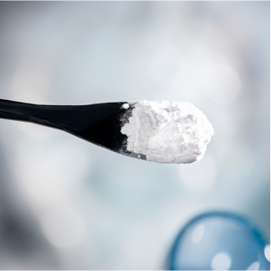 The specific properties of CR6 in that application include:
-
- 🌟 High Purity: this characteristic ensures minimal contamination, which is crucial for maintaining the integrity of the ceramic substrates and the GO layer deposited on them.
- 🌟 Controlled Particle Size Distribution: It contributes to the creation of uniform macroporous structures. This uniformity is essential for consistent membrane performance, as it influences both gas and water permeance.
- 🌟 Chemical Compatibility: compatibility of CR6 with various chemical linkers, facilitated the effective anchoring of GO layers onto the ceramic substrates.
- 🌟 Excellent Sintering Behavior: It allows the creation of mechanically strong and thermally stable supports.
Learn more about our CR range of products
Potential Applications of Composite GO/ceramic membranes
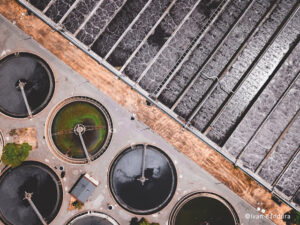 These membranes exhibits enhanced stability and permeance, as well as tailored surface properties that could be employed in various industries to address critical separation and filtration challenges such as :
- 🌟 Gas Separation: The composite membranes are suitable for applications in industrial gas separation processes, purification of natural gas, and carbon capture technologies thanks to their ability to selectively permeate certain gases while retaining others.
- 🌟 Water Treatment: The hydrophilic and hydrophobic modifications enabled by chemical linkers such as PDA, GLYMO and APTES allow the membranes to effectively separate contaminants from water. This application is particularly relevant for wastewater treatment, desalination, and the removal of organic and inorganic pollutants from water sources.
- 🌟 Chemical Processing: The composite membranes’ resistance to chemical products and thermal stability make them suitable for the separation of organic solvents, recovery of valuable chemicals, and purification of reaction products.
- 🌟 Energy Sector: The selective permeation properties can be harnessed to separate hydrogen from other gases, which is a critical step in producing high-purity hydrogen for fuel cells and other energy applications.
- 🌟 Environmental Protection: By enabling the effective separation of harmful gases and pollutants, these membranes can help reduce emissions and treat industrial effluents, supporting cleaner and more sustainable processes.
This study illustrates how substrate properties, in combination with suitable linker chemistries, govern GO laminate assembly and gas transport behaviour.
Beyond this specific case, Baikowski® offers high-purity alumina powders that can be tailored in terms of particle size distribution, morphology and formulation to support the development of ceramic and composite membranes adapted to a given process route and separation application.
Learn more on CR6 composite membrane application in the following study : A Combined Gas and Water Permeances Method for Revealing the Deposition Morphology of GO Grafting on Ceramic Membranes