Aligning Oxide Parameters with Demanding transparent ceramic applications
 In optical ceramics, performance depends on the full processing chain: powder dispersion, green body homogeneity, debinding, sintering, pressure-assisted densification when required, and final surface finishing.
For materials such as polycrystalline alumina (PCA), magnesium aluminate spinel or YAG, optical defects such as haze or scattering are often linked to residual porosity, uncontrolled grain growth, phase heterogeneity or chemical impurities.
Baikowski® supplies fine high-purity oxide powders, including spray-dried forms and customized formulations for tansparent ceramics, to help R&D teams align the starting material with their specific process window.
We support the adjustment of critical powder parameters — including particle size distribution, phase purity, surface area and dopant chemistry — according to optical, mechanical and shaping constraints.
Optical clarity starts with process-compatible powder parameters
Transparent ceramic development usually starts with a defined optical objective: high in-line transmission, total transmission, translucency, diffusion, light conversion, detection or protection. The challenge is then to translate this target into a process-compatible oxide route.
For ceramic engineers, the powder characteristics can support the required densification, microstructure and defect control in the selected process. Fine particle size may support sintering activity, while surface area, agglomeration state and morphology must remain compatible with handling, shaping and thermal treatment.
This is why Baikowski® approaches transparent ceramics through both chemistry and processability. Beyond the oxide family, the ability to adapt the powder route to forming, sintering, HIP, hot pressing or 3D printing is a key success factor of your project.
From optical challenge to oxide route
| Technical challenge | Material parameter to discuss | Process implication | Baikowski® route to evaluate |
|---|---|---|---|
| Limit scattering, haze or visible defects | Chemical purity, phase purity, residual secondary phases | Helps reduce optical losses linked to pores, inclusions, unwanted phases or absorption centers | High-purity alumina, magnesium aluminate spinel, YAG/LuAG |
| Support densification without uncontrolled grain growth | Particle size, surface area, morphology, agglomeration state | Influences packing, sintering reactivity and final grain microstructure | Fine powders, deagglomerated powders, customized powder routes |
| Improve green body consistency | Powder morphology, flowability, granule behavior | Supports more homogeneous forming, packing and shrinkage behavior | Milled powders, spray-dried powders, ready-to-press formats |
| Address optical or photonic function | Crystallinity, activator concentration and dopant homogeneity within the lattice | Relevant for light conversion, laser ceramics, scintillators or optical components, where the distribution of activator ions can influence optical response | YAG, LuAG and customized doped compositions |
| Adapt the powder to a specific process window | Surface area, phase control, dopant level, product form | Helps align the oxide with shaping, densification and finishing constraints | Customized oxide powders and process-specific formats |
Selected Baikowski® powders for transparent ceramic projects
The products below are selected examples of Baikowski® oxide powder routes relevant to transparent and translucent ceramics, including alumina, magnesium aluminate spinel and YAG-based routes.
This is not a full product catalogue. Additional grades, powder forms and customized solutions can be discussed according to the customer’s shaping route, densification strategy, optical target and final application constraints.
| Product route | Example product | Typical values / controlled features | Why it is relevant |
|---|---|---|---|
| Lower surface area magnesium aluminate spinel powder | S15CR | MgAl2O4; ≥99% spinel phase; corundum ≤0.5%; periclase ≤0.5%; BET 14–17 m²/g; d50 0.4–0.6 µm | Can be discussed when the ceramic process requires easier powder handling, feedstock preparation, tape casting or a lower surface area spinel powder route. |
| Higher surface area magnesium aluminate spinel powder | S30CR | MgAl2O4; ≥99% spinel phase; corundum ≤0.5%; periclase ≤0.5%; BET 25–28 m²/g; d50 0.15–0.3 µm | Relevant when fine particle size and higher surface area are required for demanding transparent spinel ceramic routes, including advanced shaping processes. |
| 4N α-alumina | BMA15 | 4N α-alumina; 100% α phase; BET 15 m²/g; d50 0.12 µm | Designed as a fine deagglomerated alumina route for transparent ceramics, ceramic coating, electronic ceramics, dip coating and slip casting discussions. |
| Jet-mill deagglomerated high-purity aluminium oxide | CR10 | 95% α phase; BET 7 m²/g; d50 0.25 µm; Na 12 ppm, Si 23 ppm, Fe 4 ppm, Ca 2 ppm, K 15 ppm; controlled particle size, surface area and phasic purity | Relevant for translucent alumina and transparent alumina ceramic discussions, including PCA. |
| YAG phosphor powders | YAG:Ce and customized YAG compositions | Ce content 0–3.3 at%; BET 4–8 m²/g; d50 0.13–0.17 µm; customizable rare-earth dopant chemistry | Relevant for ceramic converters, laser ceramics, scintillators, photonic components and transparent optical ceramics where crystallinity, activator distribution and dopant chemistry are key. |
For projects involving ceramic coatings or liquid-based shaping routes, Baikowski® can also provide ready-to-use suspensions. These formulations can be discussed when dispersion stability, solids loading, pH or viscosity must be controlled for processes such as dip coating, slip casting or additive manufacturing.
Customization: adapting the oxide route to your process window
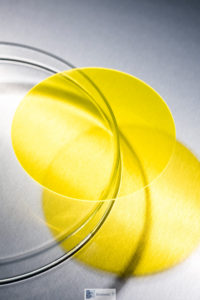 Achieving high optical performance often requires tailoring. Baikowski® can adjust oxide chemistry — spinel, alumina, YAG, LuAG — as well as physical parameters such as BET surface area, morphology, crystallinity, phase ratio or dopant chemistry.
The delivery format can also be discussed according to the process: unground powders, deagglomerated powders, spray-dried powders, ready-to-press forms or ready-to-use slurries.
FAQ: Advanced Oxide Processing & Optical Performance
✅ Why does spinel powder surface area matter before sintering, SPS or HIP?
For magnesium aluminate spinel, BET surface area and particle size influence dispersion, packing, sintering reactivity and microstructural development before pressure-assisted densification. Higher surface area spinel powders such as S30CR can be discussed when higher reactivity and fine dispersion are required, while lower surface area routes such as S15CR may be relevant when easier handling, feedstock preparation or tape casting are part of the process.
The appropriate spinel powder route S15CR, S25CR, S30CR should therefore be selected according to the shaping method, debinding constraints, sintering strategy, HIP or SPS route and targeted optical microstructure.
✅ What role can MgO doping play in transparent alumina development?
MgO doping can be used as part of a broader process design to support grain growth control during alumina sintering. In a published study on extrusion-based 3D printing, Baikalox® CR10D — an MgO-doped alumina powder containing 625 ppm MgO — was formulated into a high-solids ceramic slurry, printed, debinded and processed by two-step vacuum sintering.
The study reported dense 3D-printed transparent alumina ceramics with optical results comparable to cold isostatic pressing routes, while opening design flexibility through additive manufacturing. This case illustrates how dopant level, powder preparation, slurry behavior and sintering profile can be adjusted according to the target transparent alumina process.
✅ How do crystallographic symmetry and birefringence affect alumina and spinel optical ceramics?
Magnesium aluminate spinel (MgAl2O4) and YAG have cubic crystal structures and are optically isotropic, making them relevant routes for applications requiring high in-line transmission, such as optical windows or imaging-related components. They do not generate birefringence-related grain-boundary scattering in the same way as anisotropic polycrystalline oxides.
Our spinel products have a constant crystallographic composition with low sulfur content and low metallic impurities to ensure high transparency and mechanical properties for your ceramic parts.
Besides, transparency is also achievable by monocrystalline birefringent materials such as sapphire made of alumina, such as CR, SA or A125 powders.
α-alumina (α-Al2O3) is optically anisotropic. In polycrystalline alumina, birefringence (meaning that there are several diffraction angles for a same wavelength) can contribute to light scattering at grain boundaries, which is why alumina is often discussed for translucent PCA, discharge lamps or high-strength diffuser applications. Highly transparent alumina can still be explored, but it requires very demanding control of porosity, grain size, surface quality and processing conditions.
Translucent ceramics are mostly made of alpha alumina, such as CR or TCPLS.
✅ What to specify before discussing a customized oxide solution
 Before evaluating a powder for transparent and translucent ceramic processing, it is useful to clarify with our technical team:
- target optical function: in-line transmission, total transmission, translucency, diffusion, light conversion, detection or protection;
- target wavelength range and optical quality requirements;
- forming route: pressing, tape casting, slip casting, extrusion, injection molding, 3D printing or another process;
- sintering route: pressureless sintering, vacuum sintering, HIP, hot pressing, SPS or combined cycles;
- tolerance to residual porosity, haze, coloration, inclusions or visible defects;
- material format: powder, spray-dried powder, ready-to-press form, suspension;
- customization needs.
Explore Baikowski® solutions for transparent and translucent ceramics
 👉 Discuss customization and process compatibility with Baikowski®
Contact us to discuss your challenge with our technical team.
👉 Review our offering for transparent and translucent ceramics
Including transparent alumina, spinel and YAG powders.
👉 Download the inorganic detectors white paper
For R&D teams working with YAG, LuAG, spinel, alumina and doped aluminate systems for light conversion and detection.