
 Supporting Biodiversity Through Beekeeping
 Supporting Biodiversity Through Beekeeping
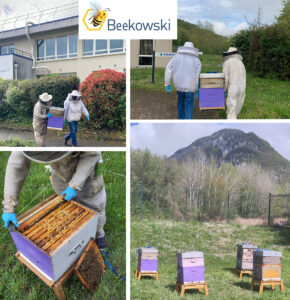
Nestled within a vast parkland in Poisy (Haute-Savoie, France)—and just 50 m from the forest—our site is far more than a production facility; it’s a living ecosystem. In April 2025, we strengthened this connection to nature by welcoming four beehives to our grounds, in partnership with Un Rêve d’Abeilles.
These industrious pollinators play a vital role in supporting biodiversity, and we couldn’t help but be inspired by their remarkable organization and tireless dedication.
This initiative marks the beginning of a beautiful collaboration and perfectly complements Baikowski’s broader CSR commitments. From long-term environmental stewardship and reducing water & gas consumption, to emissions control and industrial-waste recycling, these hives are a natural extension of our responsible practices.
The installation of these four beehives is a new milestone in this journey—and, a few months later, they have already rewarded us with our very first honey harvest.
From installation to first honey harvest
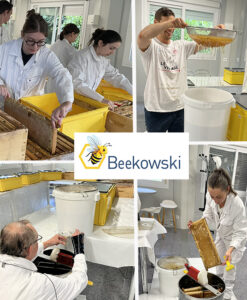
In early summer, thirteen Baikowski® employees took part in a practical workshop led by Un Rêve d’Abeilles.
On-site, just a short walk from our buildings, they discovered how a hive is organized, observed the frames, and followed each step of the extraction process: uncapping, spinning and filtering the honey.
Over this first season, our four hives have produced 52 kg of honey.
🐝 FAQ – About Our Bees
Q: Why set up hives on our site?
A: Bees are vital pollinators, supporting plant diversity and ecosystem health—key elements of our biodiversity and CSR mission .
Q: When will we see honey?
A: The bees were installed in April, and our first harvest took place in July 2025, just a few months later; the honey was then matured and jarred by our partner, Un Rêve d’Abeilles, before all jars were distributed to Baikowski® employees.
Q: How likely is it to get stung?
A: Very unlikely. The species we’re using is known for its docile nature, and our honey bees will not sting unless disturbed or threatened.
Q: Will the bees affect local wildlife or wild bees?
A: When habitat is abundant and healthy, honey bees coexist well with wild bee populations. Our parkland offers plenty of flowers and natural forage .
Q: Who looks after the hives on a daily basis?
A :The hives are managed by Un Rêve d’Abeilles, who performs regular checks, ensures the health of the colonies and organises harvesting. Baikowski® teams are invited to take part in awareness-raising moments and workshops to better understand the role of bees and the importance of biodiversity.