Aligning Oxide Parameters with Demanding Optical Applications
What makes optical material development challenging?
Many optical projects require more than a standard material reference. A coating formulation may need a specific dispersion medium or functionalization. A ceramic process may require a defined particle-size profile, BET range or spray-dried format. A phosphor project may require tailored dopants or activator distribution. A polishing process may require adjustment around abrasive size, pH, slurry stability or surface-finish target.
This is why Baikowski® and Mathym® support R&D teams by connecting key material parameters with customer process constraints.
Find the right solution for your challenge
| If your challenge is… | Start with… | Key parameters to discuss |
| Increasing refractive index in optical or ophthalmic coatings | zilight® nano-zirconia | Particle size, refractive index, haze, viscosity, resin compatibility, dispersion medium |
| Developing transparent or translucent ceramics | Spinel / high-purity alumina routes |
Phase purity, PSD, BET, impurity profile, shaping route, sintering behavior |
| Working on light conversion or detection systems | YAG:Ce / YAG / LuAG phosphors |
Garnet lattice, Ce activator, dopants, activator distribution, crystallinity, particle-size control |
| Improving optical surface finish or kiss polishing | CR-S series / CR85SF | Abrasive size, slurry stability, pH, removal behavior, roughness, scratch control |
| Developing a non-standard optical process | Customized oxide solution | Dopants, medium, functionalization, morphology, particle-size profile, slurry or powder format |
Formulate high-index optical & Ophtalmic coatings with zilight®
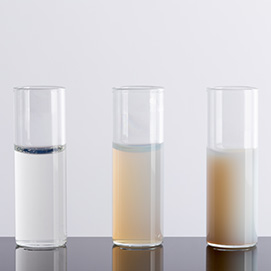 zilight® nano-zirconia (ZrO2) dispersions from Mathym® provide a high-index nanofiller route for adjusting optical coating formulations without sacrificing transparency or processability.
They can be discussed when the formulation requires small particle size, controlled morphology, an adapted dispersion medium, low haze, viscosity management and compatibility with coating processes.
Anti-reflective coatings, display applications such as microLED, AR / VR / MR, OLED and LED lighting, optical components such as telescope lenses, and optical sensors are examples of technologies that may benefit from this combination of refractive-index contribution, transparency and ease of processing.
Mathym® nanodispersions are compatible with various manufacturing processes, including dip coating, spin coating, nanoimprint lithography, inkjet printing and screen printing.
When nanoparticles are integrated into nanoscale structures or functional coatings, they can support the development of thinner, more integrated and multifunctional optical layers. The key is to align particle size, surface chemistry, dispersion medium, refractive index and process compatibility from the start.
🌟Explore: zilight® nano-zirconia
Develop transparent and translucent ceramics with spinel and alumina routes
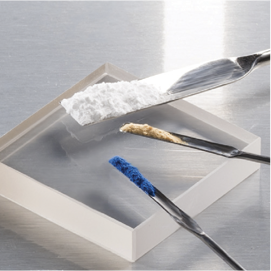 Transparent and translucent ceramic development requires powders that match the full ceramic process.
Our S15CR, S25CR and S30CR spinel powders are magnesium aluminate solutions for transparent ceramic routes where particle-size control, phase purity and low impurity levels matter. The choice between grades depends on the processing route, including feedstock preparation, tape casting, shaping, sintering or HIP.
For alumina-based routes, Baikowski® provides 4N nanosized alumina powders, including
BMA15 α milled alumina powder.
🌟 Explore: spinel S15CR / S25CR / S30CR
Control light conversion and detection with YAG:Ce and LuAG phosphors
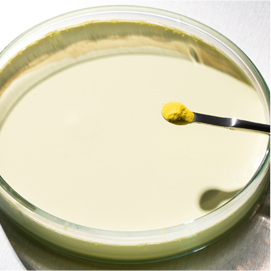 Our YAG:Ce and YAG phosphor powders and LuAG phosphors are designed with high chemical and phase purity, homogeneous distribution of activators within the garnet lattice, high crystallinity and high sintering reactivity.
In YAG:Ce, cerium acts as the activator dopant within the YAG garnet lattice, supporting light-conversion applications such as ceramic converters for LED. Baikowski® YAG powders can also be discussed in other doped compositions, including Gd, Nd or Er, depending on the target optical or photonic function.
Depending on the application — ceramic converters, laser-related materials, scintillators, projectors or detection-related systems — the key question is which host lattice, dopant system, particle-size profile, sintering route and integration method are required for the target optical function.
🌟 Explore: YAG:Ce and YAG phosphor powders and LuAG phosphor powders
Improve optical surfaces with CR-S and CR85SF polishing slurries
Optical quality also depends on the final surface. Glass, lenses, crystals, ceramics and YAG components often require polishing steps where roughness, flatness, scratch control, removal behavior and geometry
preservation must be balanced.
Our CR-S series provides 4N alumina polishing slurries from rough/intermediate polishing to fine surface finishing. Within this range, CR85SF is designed for kiss polishing, with a nominal particle size of 0.05 µm.
Explore: CR-S series and CR85SF for kiss polishing and fine surface finishing
FAQ
✅ How can optical coatings increase refractive index without haze?
By using nano-oxide dispersions such as zilight® nano-zirconia with controlled particle size, dispersion medium, viscosity and resin compatibility. These parameters help balance refractive-index contribution with transparency, haze control and coating processability.
✅ How does BET surface area influence transparent ceramic processing?
BET surface area affects powder surface activity, dispersion demand and sintering behavior. For spinel and alumina routes, it should be considered together with PSD, phase purity, impurity profile and the sintering process.
✅ Why does activator distribution matter in YAG:Ce and LuAG phosphors?
The distribution of activators within the garnet lattice is relevant to light-conversion consistency. In YAG:Ce, cerium is the activator dopant in the YAG host lattice. Baikowski® YAG and LuAG phosphors are designed with high crystallinity, chemical and phase purity, and homogeneous activator distribution.
✅ Which slurry parameters matter for optical kiss polishing?
For kiss polishing, abrasive size, PSD tail, slurry stability, pH, substrate, polishing pad and removal behavior must be aligned. CR85SF can be discussed as a fine alumina slurry route for optical surface finishing and kiss polishing.
Explore Baikowski® solutions for optics and photonics
 👉 Download the optical and ophthalmic coatings white paper
For coating formulators evaluating refractive index, haze, resin compatibility and nano-zirconia loading.
 👉 Download the inorganic detectors white paper
For R&D teams working with YAG, LuAG, spinel, alumina and doped aluminate systems for light conversion and detection.
👉 Review our optics and photonics offering
For projects requiring powder selection, nanodispersion compatibility, slurry formulation or customized oxide properties.
👉 Discuss customization and process compatibility with Baikowski®
Contact us to discuss your optical material challenge with our technical team.